Author: ZEX PR WIRE

  • Christopher O’Reilly of West Palm Beach Makes the Case for Follow-Through as a Career Strategy

    • Christopher O’Reilly, a marine technician and former yacht captain based in West Palm Beach, Florida, shares why consistent communication and patient follow-through build more durable careers than credentials alone.

    A Simple Habit with Long-Term Returns

    Florida, USA, 10th March 2026, ZEX PR WIRE — In the marine trades industry, as in most professional fields, the gap between adequate and trusted often comes down to one thing: follow-through. Christopher O’Reilly, a West Palm Beach-based Marine Technician with Coastal Air Systems and former yacht captain, has spent years refining a professional philosophy centered on what happens after the main event concludes.

    O’Reilly describes a specific example from his own experience. After a business meeting where he sensed the conversation was winding down, he chose not to push the interaction further. Instead, he sent a brief message of thanks after the meeting ended. He maintained contact. That connection eventually became a working relationship. The lesson, he says, is about respecting the other person’s time and trusting that genuine engagement creates its own return.

    What Consistent Communication Looks Like on the Water

    O’Reilly’s background in yacht captaining gave him an unusual classroom for professional development. Managing crews and vessel operations across South Florida and the Caribbean, he learned quickly that technical knowledge was the baseline expectation. What separated capable captains from trusted ones was clarity: clear expectations before a job began, honest updates during it, and reliable follow-up after.

    He applies the same standard at Coastal Air Systems, where he brings an aviation-grade documentation approach to marine systems maintenance. The result, he notes, is fewer callbacks on completed work and more calls for new projects.

    Three Habits O’Reilly Recommends

    The approach O’Reilly describes is not complicated. It begins with confirming expectations before any task starts. It continues with honest updates when complications arise, rather than waiting for someone to notice. And it closes with a short acknowledgment after the work is done. That cycle, repeated consistently, builds a professional reputation that no single credential can replicate.

    A Career Built in Stages

    O’Reilly grew up in Greenwich, Connecticut, sailing on Long Island Sound and working summers at Riverside Yacht Club. He earned his Merchant Mariner Certification and built a career on private motor yachts, eventually captaining vessels up to 126 feet in length. In 2019, Select Yachts named him captain of the motor yacht Lady Sharon Gale. He later relocated to West Palm Beach, where he transitioned into the technical side of the marine trades.

    He is active in the South Florida marine community and publishes writing on topics including big game fishing, vessel maintenance, and the Jupiter Inlet at chrisoreillypalmbeach.com.

    Start with One Follow-Up Today

    Consider the last professional conversation you left without closure. A short message, a simple acknowledgment, a direct confirmation of the next step — start there. Track how those small actions compound over the next thirty days.

    About Christopher O’Reilly 

    Christopher O’Reilly is a Marine Technician with Coastal Air Systems in West Palm Beach, Florida. He is a former yacht captain with experience on motor yachts up to 126 feet across South Florida and the Caribbean. He writes on maritime topics at chrisoreillypalmbeach.com.


  • Anthony D Galluccio Shares “The Art of the Pivot” and a Grounded Approach to Managing Setbacks

    • The Cambridge-based attorney and former mayor focuses on managing adversity, perspective, and long-term service to children and families.

    Massachusetts, USA, 10th March 2026, ZEX PR WIRE — Anthony D Galluccio is sharing a practical view of leadership built around a simple idea: the ability to pivot matters most when circumstances change and the stakes are real.

    Rather than treating setbacks as failures, Galluccio frames them as integral to his growth and opportunity to discover new experiences. No one chooses adversity but it will find you. Some adversity involves your own doing and correction. Other adversity is out of your control. In either case you better embrace it and find opportunity in it fast.  In his view, pivoting is adjusting quickly, finding opportunity and digging deep into the value set that defines your success.  For me hard work and relationships are my life blood and sustenance during any adversity. 

    “The art of the pivot is not about reinventing yourself every time something gets hard,” Galluccio said. “It is about responding with clarity, reaffirming your values, changing what you can and moving on quickly from what you can’t change. It means keeping perspective but also being able to block out the noise and stay focused on the battle in front of you. 

    Why this matters now

    Pivoting in personal and professional life also has alignment with public policy and land use permitting. Permitting is fluid as it runs with democratic zoning changes and public opinion. You have to be fluid all the time. Similarly, public policy is also always evolving and has to be responsive to new challenges and data. Public education, technical education, workforce development, immigrant communities, serving low income children with cancer and housing constantly involve new challenges. For Galluccio, topics like this are not abstract. They connect directly to years of involvement with organizations serving vulnerable populations, where the consequences of disruption are immediate and personal.

    He points to that reality as the reason he keeps returning to the same themes: staying fluid, adversity, perspective, and the opportunity to choose a better response even when outcomes are uncertain. To really embrace the fluidity of a pivot you must embrace and almost enjoy the challenge of adversity.

    The core message: the pivot is disciplined, not dramatic

    Galluccio describes a pivot as a focused response to a changed situation, not a sudden overhaul. He says the strongest pivots involve the biggest challenges. 

      • Perspective over panic
        Step back before reacting. Separate the moment from the full story.

      • Opportunity in the chaos
        Circumstances changed but look for new opportunity

      • Action without ego
        Let go of what is not working. Move toward what does, without protecting a storyline.

      • Dig Deep
        Values over emotion. Dig into your core values 

    In his view, the pivot becomes a leadership skill only when it is paired with follow-through. Anyone can talk about change. The harder task is to act on it steadily.

    Managing setbacks in practice

    Galluccio’s approach to setbacks is practical and repeatable. When circumstances shift, he recommends focusing on decisions that restore control and reduce noise:

    • Separate emotion from decision-making

    • Re-check the facts before acting

    • Identify what can still be controlled today

    • Write the next step in a single sentence and take it

    • Stay consistent with core commitments, even during disruption

    • Get the whole team moving forward with a new strategy

    He describes this as a way to protect momentum. Not through intensity, but through clarity and consistency.

    Service as a long-term teacher

    Galluccio’s perspective has been shaped by decades of civic and community involvement, including long-term service with organizations supporting vulnerable communities. He served for 15 years on the board of Hildebrand Family Self Help Center, a large transitional family housing nonprofit, and for five years on the board of Centro Latino in Chelsea, a human service agency serving mostly new immigrants.

    He says that kind of work changes how a person thinks about adversity. It is not a temporary phase. It is part of life for many families, and it calls for leaders who can adjust, respond, and keep showing up.

    About Anthony D Galluccio

    Anthony D Galluccio is a Cambridge-based attorney and law partner with a background in public service and a focus on municipal and land use permitting law. He served on the Cambridge City Council from 1994 to 2007, was Mayor of Cambridge from 2000 to 2001, and served as a Massachusetts state senator from 2007 to 2010, where he chaired the Massachusetts Senate Higher Education Committee. He manages Galluccio Assoc Inc a 501c3 charity, Ashleys Angels supporting childhood cancer in the Dominican Republic and Hope for the holidays.  He has also served in long-term community leadership roles, including board service with Hildebrand Family Self Help Center and Centro Latino Of Chelsea. Anthony also coaches youth and high school sports and has for decades.

  • Akram Alhamidi Shares a Practical Plan for Building a Business Without a Traditional Roadmap

    • Akram Alhamidi, a self-employed entrepreneur from Petal, Mississippi, outlines the approach that took him from high school graduate to gas station chain owner in a matter of years.

    Starting From a Real Need

    Mississippi, USA, 10th March 2026, ZEX PR WIRE — When Akram Alhamidi graduated high school in 2020, he did not enroll in college or enter the workforce as an employee. He opened a gas station. The decision was straightforward in his telling: people need fuel, the business model is tangible, and the work of running it well is something you can learn by doing.

    What followed was the expansion of that first location into a chain of operating gas stations in Mississippi, all managed by Alhamidi as a self-employed owner-operator.

    What Made It Work

    Alhamidi has spoken publicly about the role of consistency over inspiration in building his business. The gas station industry does not reward novelty. It rewards reliability: clean locations, functional equipment, attentive service, and steady management of daily operations.

    For a founder without a formal business background, that meant learning every function of the business in real time. Pricing, staffing, logistics, customer experience. Each one became a lesson the business itself administered.

    A Framework Others Can Apply

    For those considering a similar path, Alhamidi’s experience points to a few practical principles. Start with a business that serves a clear, consistent need. Expect to learn by doing rather than by planning. Build the discipline to operate well on ordinary days, not just on days when momentum is high. Measure progress by what the business can do now that it could not do before.

    These are not sophisticated frameworks. They are the operational realities of small business ownership, learned early and applied consistently.

    The Ongoing Work

    Alhamidi continues to develop his gas station business from Petal, Mississippi. His focus remains on expanding and stabilizing operations while maintaining the hands-on management approach that has defined his business since its founding.

    Coverage of his entrepreneurial path has appeared in BM Magazine, Brainz Magazine, and IdeaMensch, each exploring how a young founder built a fuel retail chain without a formal business education or external funding announcements.

    About Akram Alhamidi

    Akram Alhamidi is a self-employed entrepreneur based in Petal, Mississippi. He is the founder and owner-operator of a chain of gas stations launched in 2020 following his high school graduation. Alhamidi manages his business operations independently and continues to expand his fuel retail presence in Mississippi. More about his background can be found through his featured profiles on BM Magazine and Brainz Magazine.

    Start with one practical step this week: identify a business need in your community and research what it would take to serve it.

  • Sarah Josipovic Writes an Open Letter to Anyone Feeling Stuck in Their Space

    • Sarah Josipovic of Hamilton, Ontario is a Real Estate Sales Representative focused on new construction and helping people make clear, steady decisions about where and how they live.

    Ontario, Canada, 10th March 2026, ZEX PR WIRE — Sarah Josipovic, a Real Estate Sales Representative licensed with Sotheby’s International Realty Canada, is sharing a practical open letter for everyday people who feel overwhelmed by their space. The message is aimed at anyone dealing with a common problem: a home that feels harder to manage than it should, especially during change like moving, renovating, or trying to make a new place feel like home.

    This letter draws on themes from Josipovic’s work across Hamilton and the Greater Toronto Area, as well as her background in service work, new construction, and a family history tied to homebuilding and real estate.

    In her recent profile, she noted, “Much of Josipovic’s current work centers on new construction with RealPro Homes.” She also described how the work often becomes less about a quick decision and more about steady navigation: “In new construction, she operates less as a tour guide and more as a translator between vision and execution.” The profile also traced the roots of that mindset: “Her grandfather built custom homes. Her mother became a real estate agent in 2015.” And it connected her approach to her earlier work experience: “Restaurants can be unforgiving classrooms.”

    Josipovic says many people are not struggling because they do not care. They are struggling because the problem is bigger than a weekend clean-up. Space can hold stress, unfinished decisions, and the weight of daily life. And when the home feels off, everything can feel off.

    To add context, research and public data underline how closely people’s well-being is tied to their home environment:

    • In spring 2024, 56% of Canadians ages 15 to 34 reported being very concerned about housing affordability due to rising housing prices. 

    • In 2022, about 1.7 million Canadian households (11.1%) were in core housing need, with affordability as the most common challenge among those households.

    • The U.S. EPA notes people spend about 90% of their time indoors, which makes the quality and function of indoor spaces unusually influential. 

    • Recent research has found home clutter is associated with reduced well-being. 

    Open letter from Sarah Josipovic

    If your home feels like it is fighting you, I get it.

    Sometimes it is clutter. Sometimes it is too many half-finished plans. Sometimes it is a space that used to work, but your life changed and the house did not change with it. Sometimes you moved, and the boxes never really left. Sometimes you are in the middle of decisions you did not expect to make so soon.

    I grew up in Stoney Creek. My grandfather built custom homes. My mom became a real estate agent in 2015, and I later joined her in the business. I have been around the construction and renovation world long enough to know this: a home can look fine on the outside and still feel heavy on the inside.

    Before real estate, I spent over a decade in hospitality and service work. You learn fast in that kind of environment. You learn how to stay calm when things pile up. You learn how to keep moving, one task at a time, even when everything feels urgent.

    That same idea applies at home.

    When people reach out about a move or a new build, the questions are often about layouts, finishes, and timelines. But underneath that, there is usually a simpler concern: How do I make this space feel easier to live in?

    You do not need a perfect house to feel better. You need a few wins that stick. You need systems you can repeat. You need less friction in the spots that trip you up every day.

    You also need to stop treating your home like a final exam. A home is more like training. You adjust. You test. You improve. You build habits that match your life.

    If you are in Hamilton, Stoney Creek, Burlington, Grimsby, Oakville, Toronto, or anywhere nearby, you are not alone in this. A lot of people are carrying housing stress and decision fatigue right now. 

    And because we spend so much time indoors, small changes at home can have an outsized effect on how we feel day to day. 

    Here are ten things you can do this week that are practical, not preachy, and designed to be doable even if you are busy.

    What you can do this week

    1. Choose one problem zone only. A counter, a front entry, a bedroom chair, one drawer.

    2. Make a keep, relocate, donate bin. Do not overthink it. Just sort.

    3. Set a 20-minute timer, once per day. Stop when the timer ends.

    4. Clear the floor in one room. Floors change how a space feels fast.

    5. Put a basket by the entry for daily clutter. Keys, mail, chargers, sunglasses.

    6. Create one “next step” list for the space. No more than five items.

    7. Pick one storage rule: one in, one out for seven days.

    8. Walk your home like a guest. Notice what blocks movement and what feels tight.

    9. Fix one small friction point. A hook for bags, a lamp that works, a spot for shoes.

    10. If you are moving or renovating, write down your non-negotiables. Three max. Use them to filter every decision.

    If you do only one of these, pick the one that makes tomorrow morning easier. That is the real test. Not the big weekend reset. The daily repeat.

    Choose one action. Commit for seven days. Then share this letter with someone who has been saying, even quietly, that their space feels like too much.

    About Sarah Josipovic

    Sarah Josipovic is a Real Estate Sales Representative based in Hamilton, Ontario. Licensed in October 2020 with Sotheby’s International Realty Canada, she works with clients across Hamilton and surrounding areas and collaborates with RealPro Homes on new construction projects. She holds an honours Bachelor of Arts in Environment and Urban Sustainability with a minor in Geography from Ryerson University (now Toronto Metropolitan University), and she previously spent more than a decade in hospitality and service roles.

  • Jonathan Charrier Launches the “Less Waste, More Traceability” Pledge for Imports

    • Montreal-based entrepreneur Jonathan Étienne Charrier is introducing a personal pledge to cut packaging waste and raise sourcing transparency in specialty imports.

    Quebec, Canada, 10th March 2026, ZEX PR WIRE — Jonathan Charrier, founder of Charrier Global Imports, today announced a personal pledge focused on reducing packaging waste and strengthening traceability across the specialty import supply chain. The pledge is designed to turn everyday importing choices into repeatable habits that cut waste, protect product quality, and support long-term supplier relationships.

    The pledge is grounded in a simple operating reality: a curated catalogue only works when the supply chain stays stable, clean, and consistent. As Charrier has described in his work, “This is not about stocking everything. It is about choosing the right things and building the systems to support them.” He has also emphasised that, “Growth feels good. Systems protect growth,” and that “Curated catalogues depend on reliability. Without stable supply, curation falls apart.” The pledge follows the same logic in a new area: waste, packaging, and traceability standards that hold up under scale.

    Why this matters right now

    Packaging and waste pressures are rising across retail and food supply chains.

    • Global plastic waste more than doubled from 2000 to 2019, reaching 353 million tonnes. 

    • Nearly two-thirds of plastic waste comes from short-lived plastics, and packaging alone accounts for about 40% of plastic waste.

    • In Quebec, food bank demand has surged. Food banks responded to nearly 3.1 million requests for food assistance in March 2025, according to Hunger Count 2025 reporting. 

    • Moisson Montréal reported distributing 23.7 million kilograms of food and essential items in 2024–2025, a 23% increase compared with 2023–2024. 

    The pledge: seven personal commitments

    The pledge is built as concrete behaviours, not broad intentions. Charrier will apply these actions to sourcing, packaging decisions, and how products are prepared for retailers and direct customers.

    1. Approve packaging like a product. No new item enters the catalogue without a packaging review that checks recyclability, right-sizing, and unnecessary layers.

    2. Switch one line at a time to lower-waste formats. Each quarter, select one product line and reduce packaging weight or layers, then document the change for retailers.

    3. Standardise case packs to cut filler. Use consistent box sizes and case configurations to reduce void fill and minimise damage in transit.

    4. Require origin notes for every batch. Maintain a batch-level origin record for each shipment, including producer details and key handling requirements.

    5. Prefer long-term supplier agreements that include packaging targets. When renewing or signing agreements, include a clear packaging reduction goal and timeline.

    6. Audit returns for waste signals. Review damage and returns monthly to identify packaging failures, then fix the root cause rather than adding more material.

    7. Support food access locally, consistently. Maintain annual support for Moisson Montréal and link surplus-safe product handling to donation-ready standards when feasible and compliant.

    A practical “Do it yourself” toolkit

    Anyone can reduce packaging waste and increase traceability in their own buying habits. No services required.

    1. Buy fewer, better items. Choose products you will finish, not ones that will sit.

    2. Pick low-packaging options first. Loose goods, refill formats, and larger sizes usually reduce packaging per use.

    3. Ask one simple question when shopping. Where was this made, and by whom? If the label is vague, choose a clearer option.

    4. Support shops that name their producers. Retailers that list producers often have tighter sourcing standards.

    5. Choose materials that recycle locally. Prioritise paper, cardboard, glass, and metal when your area supports it.

    6. Avoid multi-layer packaging when you can. Pouches and mixed-material packs are often hard to recycle.

    7. Batch your orders. Fewer shipments means fewer boxes and less filler.

    8. Reuse packaging twice. Boxes, jars, and tins get a second life in storage, gifting, or organising.

    9. Learn your local recycling rules in 10 minutes. Most contamination comes from guessing.

    10. Track one habit for 30 days. Pick one change (like fewer shipments) and make it automatic.

    30-day progress tracker

    Use this simple tracker to build momentum. Keep it on paper or in a notes app.

    Week 1 (Days 1–7): Awareness

    • Record how many packages enter your home.

    • Note the top two items with the most packaging.

    Week 2 (Days 8–14): Swap

    • Replace one high-packaging item with a lower-packaging option.

    • Batch at least one order instead of placing separate orders.

    Week 3 (Days 15–21): Ask and choose

    • Ask “who made this” at least three times (label, website, or retailer).

    • Choose the clearer-source option at least once.

    Week 4 (Days 22–30): Lock in

    • Repeat the best swap from Week 2.

    • Reuse five containers or boxes.

    • Share the toolkit with one person.

    At the end of Day 30, write down:

    • One change you will keep.

    • One item you will stop buying due to packaging.

    • One shop or brand you trust more now.

    Readers are invited to take the pledge, try the toolkit for 30 days, and share the actions with friends, shops, or community groups. The goal is simple: less waste, clearer sourcing, and smarter habits that scale.

    About Jonathan Étienne Charrier

    Jonathan Étienne Charrier is a Montreal-based entrepreneur and founder of Charrier Global Imports, an import and export company serving boutique retailers across North America with specialty foods, artisanal goods, and wellness products sourced from producers in Europe, Africa, and South America. He is known for hands-on sourcing, long-term supplier relationships, and operational standards focused on quality and sustainable practices.

  • Francesco Saltarelli Announces a “Pre-Commitment Rule” to Reduce Rework and Improve Results

    • Francesco Saltarelli, a Montreal-based landscape designer and founder of Saltarelli Outdoor Design, is adopting a simple decision habit aimed at sharper timelines, clearer scope, and more consistent outcomes.

    Quebec, Canada, 10th March 2026, ZEX PR WIRE — Francesco Antonio Saltarelli, founder of Saltarelli Outdoor Design, today announced a personal work-habit policy he is adopting across his schedule and decision-making: a Pre-Commitment Rule designed to reduce preventable rework and improve follow-through.

    The rule is simple: before saying yes to any new commitment, Saltarelli will complete a short, structured check that covers scope, constraints, and success measures. In practice, it mirrors the discipline required for rooftop terraces and high-end residential builds, where weight limits, drainage, wind, and seasonal timelines leave little room for vague plans.

    Saltarelli’s motivation comes from a pattern he has repeated throughout his career: outcomes improve when decisions are made with clarity and pacing, not speed.

    Success, he has said, starts with repetition and follow-through. “Success is consistency over time.”
    He has also tied results to real-world use, not appearances. “A rooftop terrace that sits empty is not a success.”
    He has described leadership as reducing confusion before it spreads. “Leadership is clarity.”
    And he has stressed that progress is built in phases. “Growth takes seasons.”

    The broader problem: fast decisions, slow consequences

    Across industries, a few hard realities keep showing up:

    • The average adult makes roughly 33,000 to 35,000 decisions each day, which increases the odds of rushed, low-quality calls. 

    • Knowledge workers can spend about 2.5 hours per day, roughly 30% of the workday, searching for information. 

    • A widely cited 2023 Procore survey found 75% of projects exceeded planned budgets, with average cost increases around 15% due to mid-project changes. 

    • PMI has reported that 11.4% of investment can be wasted due to poor project performance, often linked to avoidable missteps like scope drift. 

    • Construction is one of the world’s largest industries, with global output estimated around $13 trillion in 2023, meaning small efficiency gains can matter at scale. 

    What changed

    Saltarelli is formalising how he commits to work and how he sets boundaries around time, scope, and inputs.

    Instead of deciding in the moment, he will run each new commitment through a short checklist:

    1. Define the outcome in one sentence

    2. Name the constraints (time, budget, weather, capacity)

    3. Identify the first two actions that move the work forward

    4. Decide how progress will be measured

    This applies to client work, internal planning, and personal commitments.

    Why it works

    Saltarelli’s field rewards specificity. Rooftop terraces and urban spaces punish vague assumptions. A small miss early can become a cascade of changes later. The Pre-Commitment Rule is meant to pull hidden complexity forward, while there is still room to adjust without expensive reversals.

    It also supports the style he has built his firm around: clear timelines, transparent budgeting, and hands-on oversight.

    How success is measured

    Saltarelli will track results using a small set of operational signals:

    • Fewer mid-project changes driven by unclear scope

    • More accurate timeline forecasts against real weather and capacity

    • Fewer “double work” moments where a step is repeated

    • Higher consistency in client handoffs and contractor coordination

    • More predictable weekly workload, with fewer late-stage squeezes

    Copy my approach: 10 steps anyone can implement

    1. Write your next commitment as an outcome, not a task

    2. List three constraints before you agree to anything

    3. Identify the first two actions, and schedule them immediately

    4. Set a “no same-day yes” rule for non-urgent decisions

    5. Create a one-page template for recurring decisions (money, time, projects)

    6. Use a 15-minute “scope check” before starting any multi-step work

    7. Reduce inputs: choose one source of truth for files, notes, and plans

    8. Add a buffer block in your calendar each week for rework and surprises

    9. End each week by choosing one thing to stop, not just one thing to start

    10. Track one metric for 30 days (time saved, fewer changes, fewer delays)

    Choose one step today. Apply it for 30 days. Track it with a simple weekly note. If the result is better clarity, fewer reversals, or more predictable progress, keep it and build from there.

    About Francesco Saltarelli

    Francesco Saltarelli is a Montreal-based landscape designer and entrepreneur. He is the founder of Saltarelli Outdoor Design, known for high-end backyards and rooftop terraces that combine clean architectural lines, climate-resilient planting, and practical outdoor living. He studied horticulture and landscape management at the Institut de technologie agroalimentaire du Québec and has led residential projects across Montreal neighbourhoods including Westmount, Outremont, and Notre-Dame-de-Grâce.

  • Jessie Andrews Shares a Five-Phase Success Framework for People Who Feel Stuck

    • Jessie Andrews, based in New York, is a founder, actress, and creative director focused on building durable brands through structure, storytelling, and long-term thinking.

    New York, USA, 10th March 2026, ZEX PR WIRE — Many high-performing people hit the same wall. On the outside, everything looks fine. Work is moving. Messages keep coming. Opportunities show up. On the inside, the week feels like a blur.

    One creative founder recently described it in a familiar way. They were shipping projects, but always late. Their calendar was full, but nothing felt finished. They kept checking what other people were doing and felt behind, even on days that were objectively productive.

    Then a small change flipped the pattern. They stopped trying to do more, and started building a system. One calendar they trusted. One set of notes they could actually find. A short list of weekly priorities tied to their own definition of progress.

    Within a month, the missed deadlines eased, decisions got faster, and the work felt lighter.

    That turnaround is common because the problem is common.

    The Issue Is Widespread

    Recent research shows how often people run into the same mix of pressure, distraction, and overload:

    • Procrastination affects around 20% of adults, and it can show up in career, health, and finances. 

    • In the U.S., about 48.4% of businesses fail within five years, showing how hard it is to sustain momentum without strong operations. 

    Jessie Andrews on What Actually Holds Up Over Time

    Jessie Andrews, a New York based founder and creative director who leads 1201 B Studios and multiple fashion brands, frames success as something built to last.

    Success is about longevity. It is about the relationships that last and the impact that continues long after a project launches. Accomplishments matter, but self respect and happiness matter too.

    Her work spans jewelry, swim, retail, and film. Across those worlds, her operating style stays consistent.

    She learned early that systems are not optional. Taste is not enough. Creative vision has to be paired with operational discipline, or growth gets fragile.

    She also points to a quieter risk that trips people up.

    When you compare yourself to others, it creates anxiety. Focusing on progress and measuring success by your own standard is part of staying steady.

    Copy This Framework: Five Phases to Reset Your Definition of Success

    Phase 1: Set Your Success Standard

    Write a simple definition you can track weekly. Keep it human and practical.
    Examples: fewer rushed decisions, more finished work, better relationships, steadier sleep, cleaner workflows.

    Phase 2: Install Structure

    Pick one place to manage your life. One calendar. One notes system. One weekly planning block.
    Structure protects creativity. It keeps you from rebuilding your plan every morning.

    Phase 3: Build Systems That Scale

    Choose two or three repeatable systems that remove friction.
    Examples: a shipping checklist, a meeting template, a weekly inventory of priorities, a simple customer follow-up rhythm.

    Phase 4: Treat Your Work Like Storytelling

    Even if you are not in film or fashion, the principle holds. People respond to clarity.
    Define what you do, who it is for, and what a good outcome looks like. Then align your actions with that story.

    Phase 5: Protect Balance to Sustain Output

    Balance is not a reward you earn later. It is part of the operating model.
    If your week has no recovery, your decisions get worse, and your work becomes reactive.

    Quick Wins You Can Do Today

    • Block a 30-minute weekly planning slot and keep it sacred

    • Create a three-item “must ship” list for the week

    • Move every loose task into one trusted notes app

    • Identify one relationship you want to strengthen and schedule the touchpoint

    • Write a one-sentence definition of success for the next seven days

    Red Flags That Your System Is Breaking

    • Your calendar is full but outcomes are unclear

    • You keep changing tools instead of changing habits

    • You measure progress by other people’s pace

    • Small tasks pile up until they feel heavy

    • You are always “catching up” but never finishing

    Apply It This Week

    Pick one phase and run it for seven days. Do not overhaul your life. Just install the next piece of structure. The goal is to reduce noise, finish more, and feel better while you do it.

    Start with Phase 1 and Phase 2. Define your standard. Put it on the calendar. Then build from there.

    About Jessie Andrews

    Jessie Andrews is a New York based founder, actress, and creative director. She leads 1201 B Studios and oversees multiple brands including Bagatiba and Basic Swim. She opened Tase Gallery in Los Angeles in February 2021 and has appeared in mainstream projects including Hot Summer Nights, HBO’s Euphoria (Season 2), and the Amazon Prime psychological thriller Love Bomb (November 2025).

  • Irwin Brar Calls for Practical Standards to Close the Affordable Housing Gap in Western Canada

    • Irwin Brar, CEO of Apex Construction in Redcliff, Alberta, outlines a ground-level approach to one of Western Canada’s most persistent housing challenges.

    The Gap Is Not a Mystery

    Alberta, Canada, 10th March 2026, ZEX PR WIRE — Affordable housing in Western Canada is not short on attention. It receives policy discussions, task forces, and public concern in steady supply. What it remains short on is output — completed units that families can actually move into.

    Irwin Brar has built his career around that distinction. As CEO of Apex Construction, he leads an operation that completes more than 400 affordable housing units per year across Western Canada. His position is straightforward: the shortage is a construction problem as much as a policy problem, and construction problems respond to operational discipline, not commentary.

    What Slows Production and What Does Not Have To

    Brar identifies a handful of factors that consistently delay affordable housing development: unrealistic scheduling, supplier dependencies that are not accounted for until they fail, and a tendency to overcomplicate project scope in ways that add time without adding value.

    His response to each of these has been practical. Apex builds realistic buffer periods into every schedule. Supplier relationships are managed proactively rather than reactively. Project scope stays focused on the core objective: delivering livable, affordable units on time.

    These are not novel ideas. They are the kind of operational basics that become invisible when they are working and catastrophic when they are not.

    The Role of Consistency

    Brar draws a direct line between his upbringing and his approach to operations. He grew up near his father’s job sites in Alberta, watching construction work unfold at close range from the time his family entered homebuilding in 2005. That proximity produced a set of habits he carried into Apex when he founded the company in 2018: daily site visits, written tracking of tasks and updates, and a preference for incremental improvement over dramatic pivots.

    He describes the habit of walking the full site each day as the single most reliable source of operational insight available to him. Reports summarize. The site shows.

    A Standard Others Can Apply

    For contractors, developers, and municipal partners looking to improve output on affordable housing, Brar points to a short list of behaviors that make a measurable difference:

    Build realistic timelines from the start, with explicit buffers for weather and supplier variance. Keep project scope tightly defined around the unit count and quality standard, not around impressing stakeholders. Stay physically close to active builds — management at a distance compounds every delay. Treat supplier relationships as ongoing rather than transactional.

    None of these require new technology or significant capital investment. They require consistency.

    About Irwin Brar

    Irwin Brar is the CEO of Apex Construction and COO of Ridge Apartments, based in Redcliff, Alberta. Apex Construction builds more than 400 affordable housing units annually across Western Canada. Brar also owns and operates branded hotel properties, including Hilton and IHG franchises, and manages specialty retail operations. More information is available at irwinbrar.com.

  • Inveslo Advances Global Trading Presence with FSC Mauritius Approval and MT5 Integration

    Inveslo Secures FSC Mauritius License, Launches MT5 Platform, and Unveils Next-Generation Client & IB Areas, Setting New Standards in Innovation and Compliance

    Dubai, UAE, 19th February 2026, ZEX PR WIRE, Inveslo proudly announces two transformative milestones that establish a new benchmark in global trading. The company has secured a regulatory Licensed by FSC Mauritius (License No: GB25205645) and launched its next-generation MetaTrader 5 (MT5) trading platform, enhanced with redesigned Client and Introducing Broker (IB) areas.

    These achievements represent a major advancement in Inveslo’s mission to deliver institutional-grade trading performance under the highest standards of compliance, transparency, and trust. The FSC Mauritius license strengthens governance, regulatory oversight, and global credibility, ensuring traders and partners can operate with confidence in a fully regulated environment.

    Powered by cutting-edge MT5 technology, the platform delivers lightning-fast execution, deep liquidity access, multi-asset trading, and advanced analytics. The upgraded Client Area and IB Area further streamline portfolio management, client tracking, and performance insights, creating a unified, high-performance trading ecosystem.

    With these milestones, Inveslo continues to shape the future of regulated, technology-driven trading worldwide.

    FSC Mauritius License: Setting a Global Standard for Compliance

    The official FSC Mauritius authorization marks a significant step in Inveslo’s global expansion strategy. This regulatory milestone strengthens the company’s governance and compliance infrastructure, providing clients and partners with a secure, transparent, and fully regulated trading environment.

    By achieving FSC Mauritius licensing, Inveslo ensures that traders and Introducing Brokers operate within a trusted framework, reflecting the company’s dedication to integrity, transparency, and adherence to international financial regulations. The license positions Inveslo for sustainable growth across international markets and reinforces its standing as a globally trusted broker.

    MT5 Trading Platform: Institutional-Grade Technology for All Traders

    Central to Inveslo’s offering is its MT5-powered trading platform, delivering professional-grade trading performance across forex, commodities, indices, and other global markets. Designed for speed, reliability, and advanced analytics, the platform enables users to make smarter, faster, and more informed trading decisions.

    Enhanced Client & IB Areas: Optimized for Modern Traders and Partners

    Complementing the MT5 platform is a fully redesigned Client Area and Introducing Broker Area. While the FSC license and MT5 infrastructure remain central, these upgraded areas deliver a more intuitive and efficient experience:

    Client Area: Consolidates account management, deposits, withdrawals, and trading activity into one seamless interface, providing real-time portfolio insights and actionable market data.

    IB Area: Offers a comprehensive suite of partnership tools, including client tracking, performance analytics, and engagement capabilities, enabling Introducing Brokers to grow and scale their businesses effectively.

    Together, these enhancements integrate seamlessly with MT5, delivering a unified ecosystem combining regulatory assurance, high-performance trading, and advanced client and partner tools.

    CEO’s Vision: Experience Meets Innovation

    “This year marks a defining moment for Inveslo,” said Dr. Farrukh Adeeb, Chairman & CEO.

    “With years of experience in global financial markets, I have seen how technology and regulation must work together to create a truly reliable trading environment. By securing our FSC Mauritius license and introducing the MT5-powered platform alongside upgraded Client and IB Areas, we are combining regulatory excellence with cutting-edge performance.

    Our mission is to empower traders and partners worldwide with tools that are fast, transparent, and professional-grade — built not only for today’s markets but also for the evolving future of global trading. These milestones reflect our commitment to innovation, compliance, and delivering an ecosystem where trust and performance go hand in hand.”

    The All-New Inveslo Experience Is Live

    Traders and partners worldwide are invited to explore the MT5 platform under the assurance of FSC Mauritius regulation. Smarter execution, deeper insights, and trusted growth come together to create a global trading ecosystem designed for modern financial markets.

    Smarter decisions. Faster execution. Trusted growth. Welcome to Inveslo 2.0.

    About Inveslo

    Inveslo is a regulated global trading platform Licensed by FSC Mauritius (License No: GB25205645), delivering advanced financial technology, trading solutions, and comprehensive partnership programs. Committed to innovation, compliance, and client success, Inveslo empowers traders and Introducing Brokers worldwide to achieve their financial ambitions across dynamic global markets.

    For more information, visit: www.inveslo.com

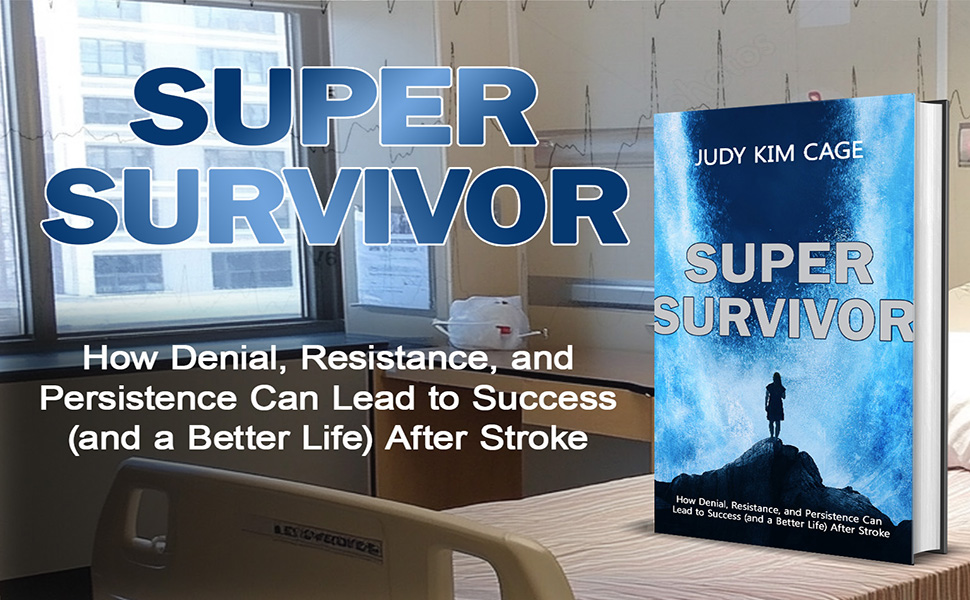
  • Judy Kim Cage’s SUPERSURVIVOR Reaches no.1 on Amazon in Three Categories, Inspiring Stroke Survivors Worldwide

    • Stroke survivor and author Judy Kim Cage has reached a major milestone as her memoir SUPERSURVIVOR claims the #1 spot on Amazon in Nervous System Diseases, Women’s Health, and Motivational Self-Help categories, inspiring stroke survivors worldwide to view their physical and emotional battles from a new perspective.

    Philadelphia, Pennsylvania, 18th February 2026, ZEX PR WIRE, Judy Kim Cage is celebrating a remarkable achievement after her book, SUPERSURVIVOR: How Denial, Resistance, and Persistence Can Lead to Success (and a Better Life) after Stroke, secured the #1 position on Amazon in three major categories: Nervous System Diseases, Women’s Health, and Motivational Self-Help. This achievement shows her increasing influence among stroke survivors who respect her honest storytelling, message of resilience, and humor.

    Written from lived experience, SUPERSURVIVOR offers readers an unfiltered look into what life looks like after a stroke. Judy Kim Cage takes readers back to the moment everything changed. One second, she was living a bustling, successful everyday life. The next, she was facing uncertainty about walking, independence, and even her sense of identity. She shares her thoughts through raw honesty and humor, documenting the emotional and physical battles that followed.

    SUPERSURVIVOR currently holds a 5-star rating and has found a home on the shelves of readers who see their own journeys reflected in Cage’s experience. The book, with its candid tone and practical insights, is a must-read for stroke survivors, caregivers, and anyone going through a major life shift.

    Inside the book, Cage walks readers through the real side of recovery. She explains the ups and downs of rehabilitation and why the health journey is not linear. She also addresses the emotional challenges survivors face, including grief, anger, and the struggle to accept a changed body and lifestyle.

    SUPERSURVIVOR also shines a light on topics many doctors don’t fully prepare patients for. Cage shares hard-earned lessons about long-term disability, insurance systems, and self-advocacy. She hopes that the book will provide survivors with the encouragement to speak up for themselves and personalize their recovery journey. The book also focuses on rebuilding confidence and finding purpose. Cage shows that while a stroke changes everything, it does not have to define who you are. Through her honesty, readers discover how persistence and mindset help turn difficulty into motivation and even joy. 

    SUPERSURVIVOR is enriched with personal philosophy and practical wisdom. As a stroke survivor herself, Cage understands the fear and uncertainty that come after such a life-changing event. Her story shows how it is possible to build a meaningful life after hardship. 

    SUPERSURVIVOR is available on Amazon.

    About the Author:

    Judy Kim Cage is a stroke survivor, writer, and advocate for people facing recovery after major medical events. She has a background in finance, and never expected to become an expert in rehabilitation or healthcare systems. Her personal journey led her to share the unfiltered truth about recovery. Through her writing and advocacy, she helps others find strength, humor, and hope after the unimaginable.

    Instagram: @judykimcagetheauthorpage